
Mon–Sat 10 AM – 6 PM · Sun closed 4146 W Camelback Rd, Phoenix, AZ 85019 Financing available

Sound Image · Phoenix, AZ

Car Amplifier Installation in Phoenix, AZ

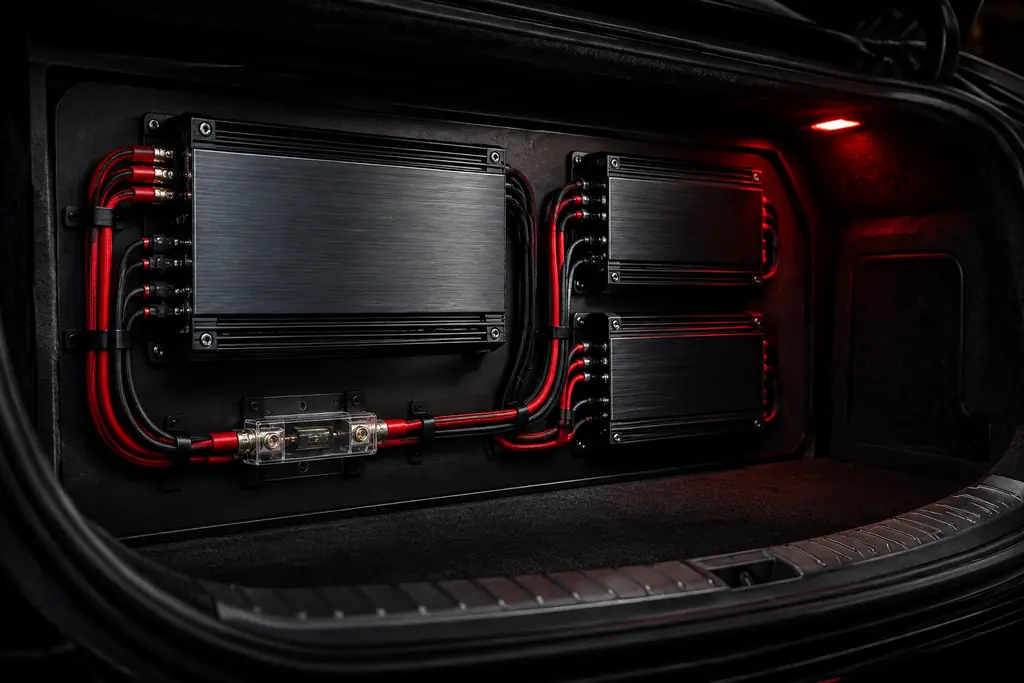
An amplifier turns a good set of speakers into a great system. It gives your speakers and subs the clean power they need to play loud without distortion. But an amp is only as good as its install. Undersized wire, missing fuses and a gain cranked all the way up are how systems blow speakers and cause electrical problems. We install amplifiers the right way, with oxygen-free copper wiring, proper fusing and gains set with test tones.

Amplifier Installation at Sound Image in Phoenix, AZ
  • Mono, 4-channel and 5-channel amplifiers
  • OFC power and ground wire, properly fused
  • Gains set with test tones, not guesswork
  • Big 3 and charging system upgrades
  • Mounted for airflow in Arizona heat

Mono, 4-channel or 5-channel?

A mono amplifier powers subwoofers and is built to deliver lots of current into low-impedance loads. A 4-channel amp powers front and rear speakers, or front speakers plus a small sub with two channels bridged. A 5-channel amp does both jobs in one chassis, with four channels for speakers and one for the sub, which saves space and simplifies wiring.

We match amp power to your speakers’ RMS ratings and impedance, so everything has headroom without being pushed past its limits. Not sure what you need? We’ll look at your current speakers and recommend an amp that fits them and your space.

  • Mono amps for one or more subwoofers
  • 4-channel amps for door and dash speakers
  • 5-channel amps for a full system in one chassis
  • Compact amps that hide under seats
  • Amps with built-in DSP for precise tuning
The gain is not a volume knob

The gain control matches the amplifier to the signal coming from your radio. Set it too high and the amp clips, sending a distorted signal that overheats voice coils and blows speakers, often before it even sounds loud.

We set gains with test tones and a meter or oscilloscope, then fine-tune by ear. If your factory radio doesn’t have RCA outputs, we use the amp’s speaker-level inputs or a quality line-output converter to get a clean signal. We work with brands like AudioControl and PAC for those conversions.

A correctly set gain keeps the amp cooler and your speakers alive longer. Gains cranked too high are one of the most common causes of blown speakers.

Wiring, fusing and the Big 3

We use oxygen-free copper (OFC) power and ground wire sized for your amplifier’s current draw. Copper-clad aluminum (CCA) wire has higher resistance, so it runs hotter and delivers less power. Every power run gets a fuse within about 18 inches of the battery, and we protect the wire with grommets wherever it passes through metal. Signal cables run down the opposite side of the car from the power wire to keep noise out.

Bigger systems need a healthy charging system. The Big 3 upgrade replaces or supplements three key factory cables to cut voltage drop. We’ll also tell you when an AGM battery or high-output alternator makes sense.

  • Alternator positive to battery positive
  • Battery negative to chassis
  • Engine block to chassis ground

Keeping amps cool in Arizona

Trunks and under-seat spaces bake in a Phoenix summer, and amplifiers add heat of their own. When an amp overheats, it shuts down into protect mode, usually in the middle of your favorite song.

We mount amps where air can move around them, never buried under carpet or stuffed against a hot panel, and choose efficient Class D designs for bigger power. A good install also protects your battery: the amp turns on only with the radio, and we check for parasitic draw before the car leaves the bay.

Our shop on Camelback Road is an easy drive from Maryvale, I-17 and Loop 101. Call or stop by for a free quote.

Brands we work with for amplifiers

Brands with a red dot are on our Phoenix showroom shelves right now. Ask us about availability for anything else.

  • Kicker
  • Rockford Fosgate
  • Alpine
  • Memphis Audio
  • JL Audio
  • Skar Audio
  • AudioControl
  • Stinger

The process

How we handle your amplifiers

  1. 01

    Plan the power

    We match amplifier power to your speakers and subs, check your charging system and give you a free quote before any work starts.

  2. 02

    Run the wiring

    We run OFC power, ground, signal and turn-on wires, with a fuse near the battery and grommets through metal.

  3. 03

    Mount for airflow

    The amplifier goes where it stays cool and secure, under a seat, on an amp rack or behind a panel.

  4. 04

    Set gains and test

    We set gains and crossovers with test tones and a meter or oscilloscope, then confirm clean output at volume.

FAQ

Amplifier Installation questions

What does the Big 3 upgrade do?

The Big 3 replaces or supplements three factory cables: alternator positive to battery positive, battery negative to chassis, and engine block to chassis. Bigger cables reduce voltage drop, so your amplifier gets steadier power and your headlights dim less on heavy bass notes. It’s a common step for high-power systems, and we’ll tell you if yours needs it.

Can I add an amplifier to my factory radio?

Yes. Many amplifiers have speaker-level inputs, and a line-output converter can create a clean RCA signal from the factory radio; we work with brands like AudioControl and PAC. In newer vehicles with a factory amplifier or premium system, a DSP-based interface usually does a better job. We’ll tell you which approach fits your vehicle.

What’s the difference between OFC and CCA wire?

OFC is oxygen-free copper. CCA is aluminum with a thin copper coating. Aluminum has higher resistance, so CCA wire of the same gauge carries less current and heats up more. For amplifier power and ground runs, we use OFC wire sized to the amp’s current draw. It’s safer, and it delivers the power you paid for.

Why do amps overheat in Phoenix?

Heat has to go somewhere. An amp sitting in a sealed trunk that’s already baking in summer sun has little room to cool off, so it shuts down to protect itself. Mounting it with airflow, setting the gain correctly and running the right speaker impedance all help your amp stay out of thermal protection.

How long does an amplifier install take?

Most single-amp installs take about 2–3 hours. Adding more amplifiers, a DSP, a second battery or the Big 3 upgrade adds time. We’ll give you a clear time frame when we quote the job, so you know when to expect your car back.

Sound Image · Phoenix, AZ

Ready for amplifiers? Let's get you booked.

Stop by 4146 W Camelback Rd, call us, or book online in under a minute. Free quotes, financing available, Mon–Sat 10 AM – 6 PM · Sun closed.